
Back discomfort is common during pregnancy, but it should not automatically be dismissed as something that must simply be endured. Changes in posture, increased weight, stretched abdominal muscles, and pregnancy hormones can place extra strain on the lower back and pelvis. Safe relief usually involves gentle movement, better support, careful lifting, and knowing which symptoms require prompt medical attention. ([acog.org](https://www.acog.org/womens-health/faqs/back-pain-during-pregnancy?utm_source=openai))
Why does pregnancy cause back pain?
Pregnancy gradually shifts the body’s center of gravity forward. As the uterus grows, the abdominal muscles stretch and may provide less support for the spine. Pregnancy hormones also loosen ligaments around the pelvis, which can make joints feel less stable and increase strain on nearby muscles. ([acog.org](https://www.acog.org/womens-health/faqs/back-pain-during-pregnancy?utm_source=openai))
Pain may be felt in the lower back, buttocks, hips, or pelvic area. It can become more noticeable after standing, walking, climbing stairs, carrying groceries, or sitting in one position for a long time. In a dense coastal community such as Long Beach, daily routines may include walking, stairs, public transportation, or prolonged standing during errands, all of which can expose the back to repeated stress.
What can safely relieve back pain at home?
Several low-risk strategies can reduce discomfort:
- Change positions regularly. Avoid sitting or standing for long uninterrupted periods. A short walk around the home or a gentle position change may be more helpful than remaining completely still.
- Use supportive seating. Sit with both feet supported and place a small pillow or rolled towel behind the lower back. A firm chair may provide more support than a soft couch.
- Sleep on your side. Later in pregnancy, side-lying with a pillow between the knees and another under the abdomen may reduce strain. A full-length pillow can also help support the hips and legs. ([acog.org](https://www.acog.org/womens-health/faqs/back-pain-during-pregnancy?utm_source=openai))
- Wear stable footwear. Shoes with a low heel, cushioning, and adequate arch support can reduce the tendency to shift weight forward. This can be especially useful when walking on uneven sidewalks or wet surfaces.
- Try gentle warmth. A heating pad or warm water bottle may soothe tight muscles when used on the lowest comfortable setting, wrapped in a towel, and limited to short periods. Avoid excessive heat, hot tubs, and saunas during pregnancy. Cold packs wrapped in cloth may also help. ([acog.org](https://www.acog.org/womens-health/faqs/back-pain-during-pregnancy?utm_source=openai))
Heat should feel comfortably warm rather than hot. Do not fall asleep with a heating pad in place.
Is walking or exercise helpful?
For most people with an uncomplicated pregnancy, gentle activity can help maintain strength, posture, and daily function. Walking, swimming, water exercise, and pregnancy-appropriate mobility exercises are commonly used options. Water supports body weight and may be comfortable when land-based walking aggravates the back. ([acog.org](https://www.acog.org/womens-health/faqs/back-pain-during-pregnancy?utm_source=openai))
Start gradually if exercise was not part of the routine before pregnancy. The “talk test” is a practical guide: moderate activity should generally allow conversation without unusual breathlessness. Stay hydrated, avoid overheating, and stop if an activity causes pain rather than mild muscle effort. ([acog.org](https://www.acog.org/clinical/clinical-guidance/committee-opinion/articles/2020/04/physical-activity-and-exercise-during-pregnancy-and-the-postpartum-period?utm_source=openai))
A simple movement sometimes taught during pregnancy begins on hands and knees, with hands under the shoulders and knees under the hips. The back is gently rounded toward the ceiling and then returned to a neutral position without forcing the range of motion. This should be performed slowly and only after an obstetric clinician confirms that it is appropriate.
Do not begin a new exercise program without checking first if there is a high-risk pregnancy, bleeding, placenta-related concern, significant pelvic pain, heart or lung disease, or another medical restriction.
How should lifting and household tasks be modified?
Lifting technique matters because pregnancy can change balance and joint stability. Bend the knees, keep the back as neutral as possible, hold objects close to the body, and avoid twisting while carrying. Turn by moving the feet rather than rotating through the spine. Avoid heavy loads whenever possible. ([acog.org](https://www.acog.org/womens-health/faqs/back-pain-during-pregnancy?utm_source=openai))
For household tasks, divide loads into smaller amounts. Instead of carrying one heavy bag, use two lighter bags or make several trips. Keep frequently used items at waist level when possible. During colder weather, avoid rushing across icy or wet walkways; a fall-prevention decision is more important than finishing an errand quickly.
Can massage, chiropractic care, or physical therapy help?
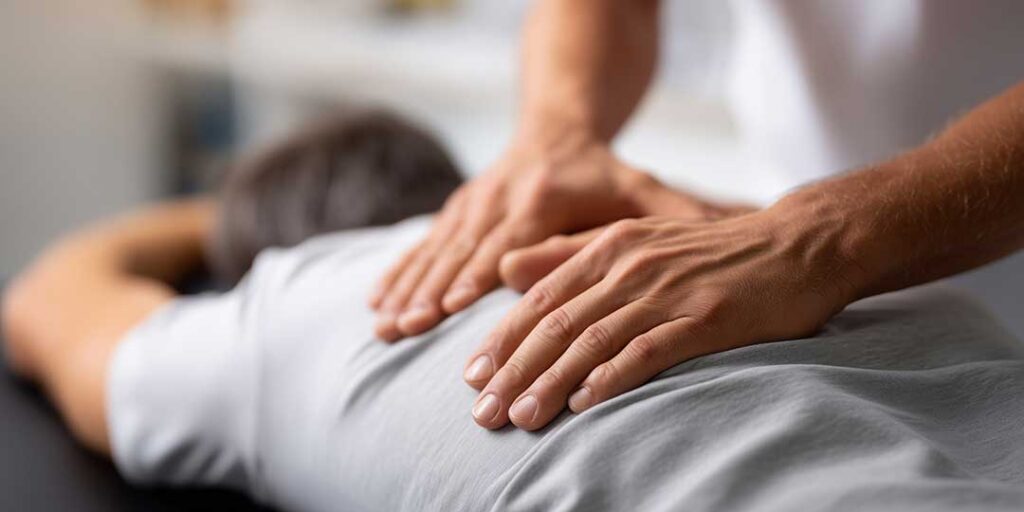
Hands-on care may help some pregnant patients, but it should be coordinated with the pregnancy care team. A physical therapist with prenatal experience can evaluate movement, pelvic support, posture, and safe exercises. Massage should be provided by someone who knows the person is pregnant and understands pregnancy-related positioning.
Chiropractic treatment should not be treated as a substitute for obstetric evaluation. Before any spinal or pelvic manipulation, discuss the symptoms with an obstetric clinician and disclose pregnancy details, prior injuries, bleeding, contractions, pelvic pain, medical conditions, and medications. Avoid forceful self-manipulation, high-velocity techniques performed without appropriate pregnancy training, or any treatment that increases pain, dizziness, abdominal discomfort, or nerve symptoms.
The goal of conservative care should be improved comfort and function—not forcing the spine or pelvis into a particular position.

Are pain medicines safe during pregnancy?
Medication decisions should be individualized. Acetaminophen is commonly considered for pain during pregnancy, but the correct choice and dose depend on medical history, liver health, other medicines, and the specific pregnancy. Do not exceed package directions or combine multiple products that contain acetaminophen. ([medlineplus.gov](https://www.medlineplus.gov/druginfo/meds/a681004.html?utm_source=openai))
Do not start ibuprofen, naproxen, aspirin, muscle relaxants, herbal products, or topical pain medicines without asking the obstetric care team. “Over-the-counter” does not mean automatically safe during pregnancy. A pharmacist or prenatal clinician can check the ingredients in combination cold, flu, sleep, or pain products.
When is pregnancy back pain a warning sign?
Back pain requires prompt medical advice if it is severe, persistent, worsening, or continues for more than two weeks. Contact the obstetric care team urgently if back pain occurs with:
- Vaginal bleeding or fluid leakage
- Regular painful contractions or cramping
- Fever or chills
- Burning or pain with urination
- Pain under the ribs or in the side
- New weakness, numbness, or difficulty walking
- Loss of sensation in the legs, buttocks, or genital area
- Chest pain, severe shortness of breath, dizziness, or one-sided leg swelling
These symptoms can indicate infection, preterm labor, a nerve problem, or another condition that should not be managed with home exercises alone. ([acog.org](https://www.acog.org/womens-health/faqs/back-pain-during-pregnancy?utm_source=openai))
Most pregnancy-related back pain improves with supportive habits and appropriate activity, but new or unusual symptoms deserve careful attention. A practical approach is to reduce aggravating tasks, maintain gentle movement when allowed, use positioning and temperature-based comfort measures safely, and communicate changes promptly to the prenatal care team.
